Kentucky’s Kitchen Table is a project of Citizen and Self, a class in the Mahurin Honors College, and the Department of Philosophy and Religion at Western Kentucky University. Students gather together friends, family, and neighbors to have conversations around the kitchen table about what matters to them and what it means to be part of a community. As of Summer 2019, over 1800 Kentuckians in 70 towns and cities across the state have taken part in our Kentucky Kitchen Tables. Here you can see some pictures from the shared dinners, and read about what people learn when they gather together for conversation about who we are and who we want to be.
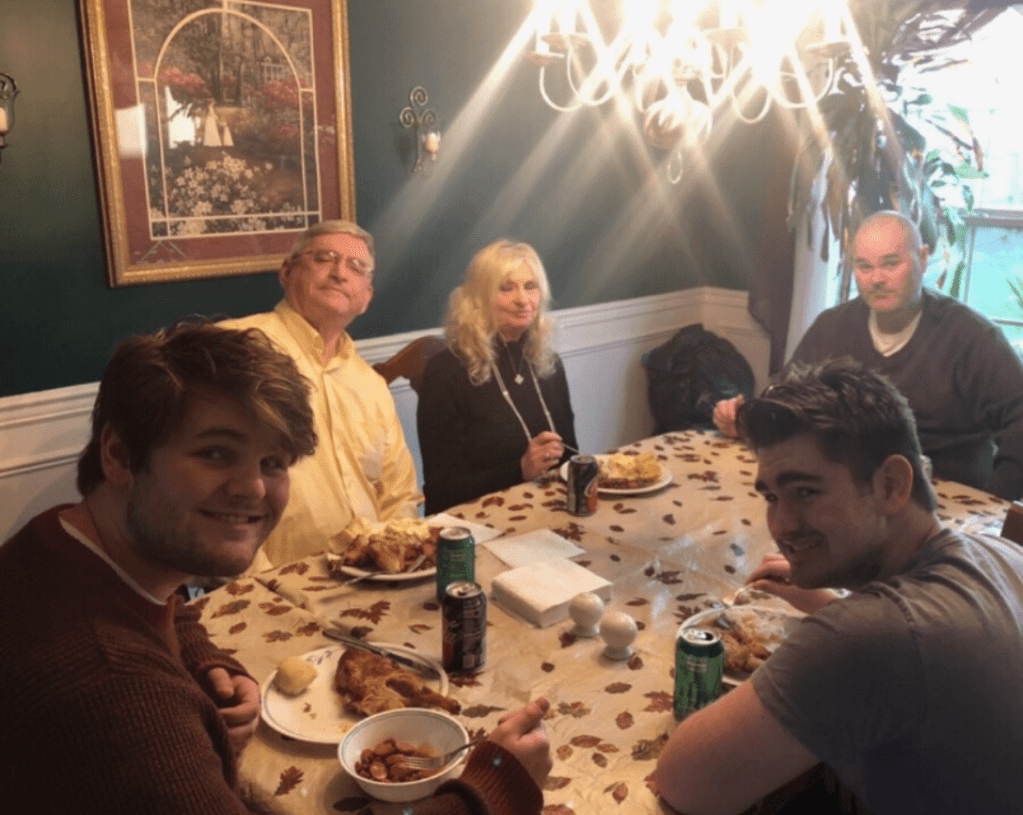
I did my KKT on April 1st at my home in
Versailles, Kentucky. We were unable to find a well-suited home in Bowling
Green at which to complete my KKT, therefore, I completed it with my parents
and two sisters. My dad, Rob, is currently an engineer at Toyota and is what some
might call a “computer geek”. He has a lot of love to give and there isn’t
anything he wouldn’t do for family. He was raised in a very conservative
household. His father was in the army and thus, him and his family moved around
a lot. My dad ended up living in several different places before settling in
Kentucky, including Germany. Although my dad’s family is very right wing in
their beliefs, my dad seems to be more moderate (although still conservative).
I believe this has partly been because of my mother’s attitudes towards issues.
My mom, Julie, is an accountant who loves her job. She was making good money
while working for the state early in her career, however, she quit her job to
raise her kids when they were born. She also grew up in a military household, but
a very different one. Although her parents are overall conservative, they are
progressive thinkers. My mom is complicated and tends to analyze each
individual issue extensively when forming her opinion. She is a deep thinker as
well as a progressive thinker. She is always pushing her kids to think openly
about all issues. My first sister, Brittany, who is 20 years old, is currently
majoring in communication disorders at Easter Kentucky University. She is a
very caring individual and currently works as a nursing assistant at a
retirement home. My other sister, Katelyn, who is 24 years old, graduated from
Murray State University with a major in liberal arts and currently works as a
desk clerk at a Hilton hotel. She is very book smart and loves relaxing and
playing video games on her free time. Both, Brittany and Katelyn, are uninterested
in many political and worldly issues. However, when there is an issue they show
interest in, they are very left wing in their thinking. Lastly, there was me:
Justin. I am currently majoring in Business Economics at Western Kentucky
University and I love the anything that takes place outdoors, especially
backpacking and rock climbing. I am very facts oriented when making decisions
and, like my dad, family is very important to me. I tend to be socially liberal and fiscally
conservative, or libertarian.
We all had a part is making the dinner, which included
ham, mashed potatoes, green beans, and homemade pistachio pudding for dessert.
When first asked the question, “What does citizenship mean to you?”, the table
was silent with thought. After considering the question, Julie explained that
she thought being a good citizen was using your time and talents to help your neighbor. When asked what “neighbor”
meant to her, she stated the importance of global citizenship. She thought it
was every citizen’s right and duty to help those in need to the best of their
ability, no matter the country. Rob chimed in and agreed, however noted that
your family comes first, and local neighbors come second, and global neighbors come
last. The table seemed to all agree with this, however the extent to which we
needed to practice global citizenship differed. Brittany, Katelyn, and Julie
all thought the duty we have to others abroad was just important as the duty we
have to those in our country; Rob and I disagreed.
After reaching a consensus that citizenship was using
your time and talents to help one another, I decided to shift the conversation
to specific roles of citizens. I asked the table what they thought about
specialization and how they think it impacts, or should impact, your role as a
citizen in social issues (an idea brought forth my John McKnight in
“Professionalized Services”). The topic we ended up discussing was climate
change. Julie started the discussion by declaring it was not only our right,
but our obligation to do everything we can to prevent climate change. Rob
agreed that we should do our best to reduce our carbon foot print at home, but
believed it was not our obligation to fix the damage done by others, including
corporations. He believed that specialization was required to correct social
issues such as climate change. He said he would do what he could to reduce his
carbon footprint, however, he works hard at his job and should not be expected
to find new ways to reduce a corporation’s emissions; that was the job of the
specialists. This led to a discussion about Americans’ large sense of
individualism which seemed to spark Brittany and Katelyn’s interest. Both
Brittany and Katelyn agreed that capitalism was to blame for Americans’ sense
of individualism. They believed that to live together we need to share the
nation’s prosperity somehow, an idea that seemed to sound a lot like socialism.
Rob and I both believed that one could be a good citizen, and neighbor, while
living in a capitalist community; we agreed that good values are rooted in the
way you are raised and the culture your family has. The final comment was made
by Julie and seemed to conclude the overall thoughts of the group: “You should
act like a camera crew from 60 Minutes is following you around your whole life,
if you don’t want the whole world to see it, don’t do it.”
Before this discussion, I only had a rough idea of what citizenship meant to me. I disagree with my family on countless things, however, I get many of my values and opinions from them; the value of citizenship being one of them. From the readings in this class I have been able to become well educated in different ideas of citizenship, however, from this discussion I learned that my idea of citizenship stems from a sense of individualism as well as family values. I learned that everyone has their own individual time and talents, it is simply everyone’s duty to use them to better their neighbor. I also learned that I still don’t know my opinion of specialization in social issues. I was pro-specialization at the beginning of the year, however, after reading John McKnight’s “Professionalized Services”, I am unsure. This class and discussion opened my mind to a view on specialization that I was not aware of and I hope to continue to explore the options of tackling social issues as I mature.
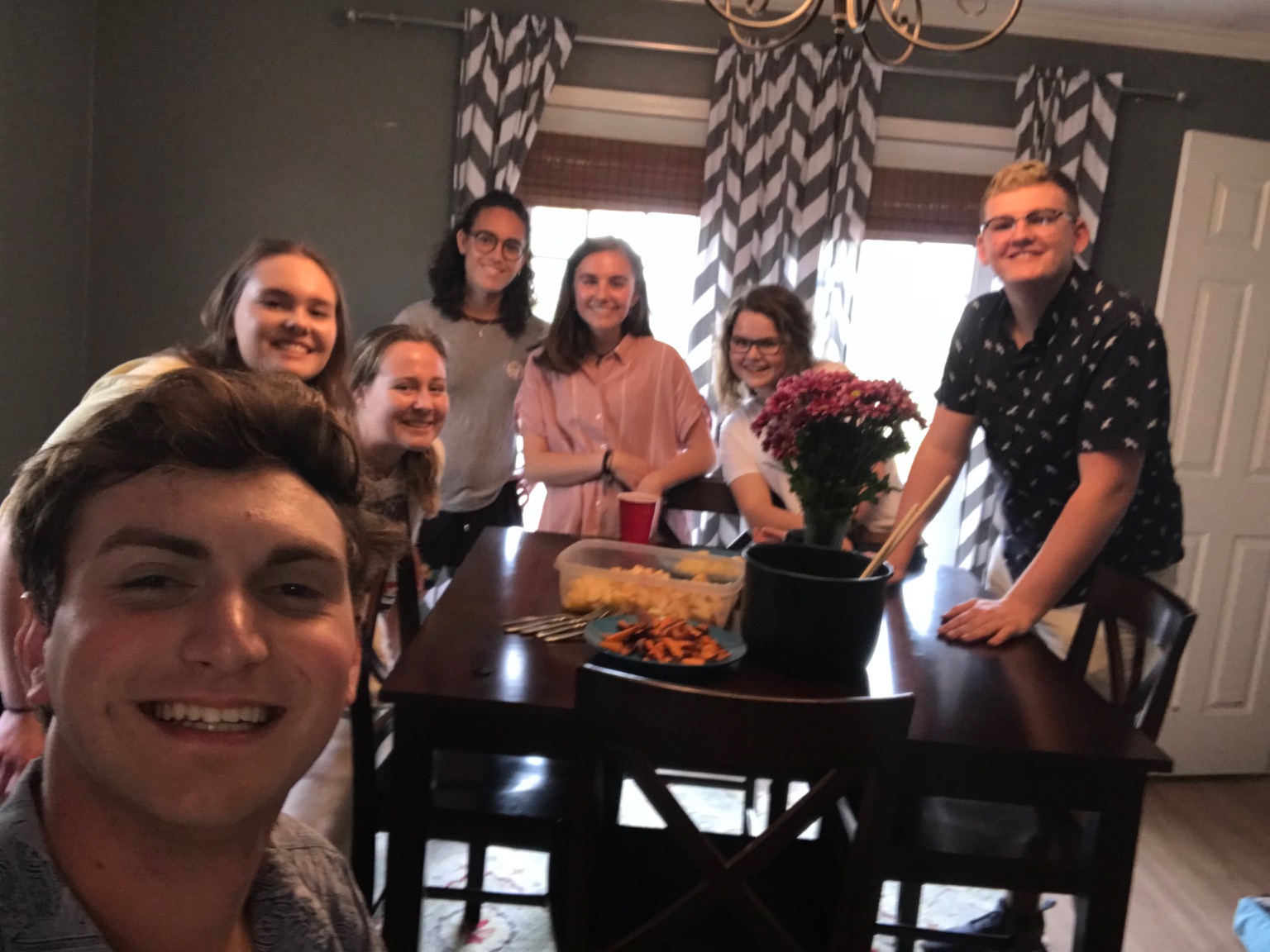
I held my Kentucky Kitchen Table on March 31th, 2019 at my friend’s apartment right off campus in Bowling Green. There was a total of seven people there: Amelia, Elizabeth, Gina, Kate, Lauren, and Tatum. I know each of these people on different levels and from different places. Amelia and Gina are the people I knew the least but have gotten to know them better through this assignment because of our discussions which have carried on outside of the classroom and kitchen table. Elizabeth is one of my close friends who is in another class of Honors 251 and I always have good conversations with her. She adds different perspectives to things that challenge my views and make me question why I believe what I do, much like this class has done. Kate is deeply rooted in her religious beliefs and had many insightful things to say during our meal. Kate lives in the apartment and is a religious major. Lauren is spunky, but considerate of what she says and also lives in the apartment. She is a biology major with a history minor. Tatum is thoughtful and always thinks of other people before herself. She lives in the apartment as well but will be going to pharmacy school next year in Birmingham, Alabama. Although we are all freshman and sophomores in college, the diversity came from our backgrounds and unique experiences we have all been through. I invited Amelia and Gina, who are in my class, to my Kentucky Kitchen Table in order to help them have a place and because I thought they had a lot to offer and add to the conversation. I think we all did pretty equal work and each gave our best effort to help facilitate the discussion we had.
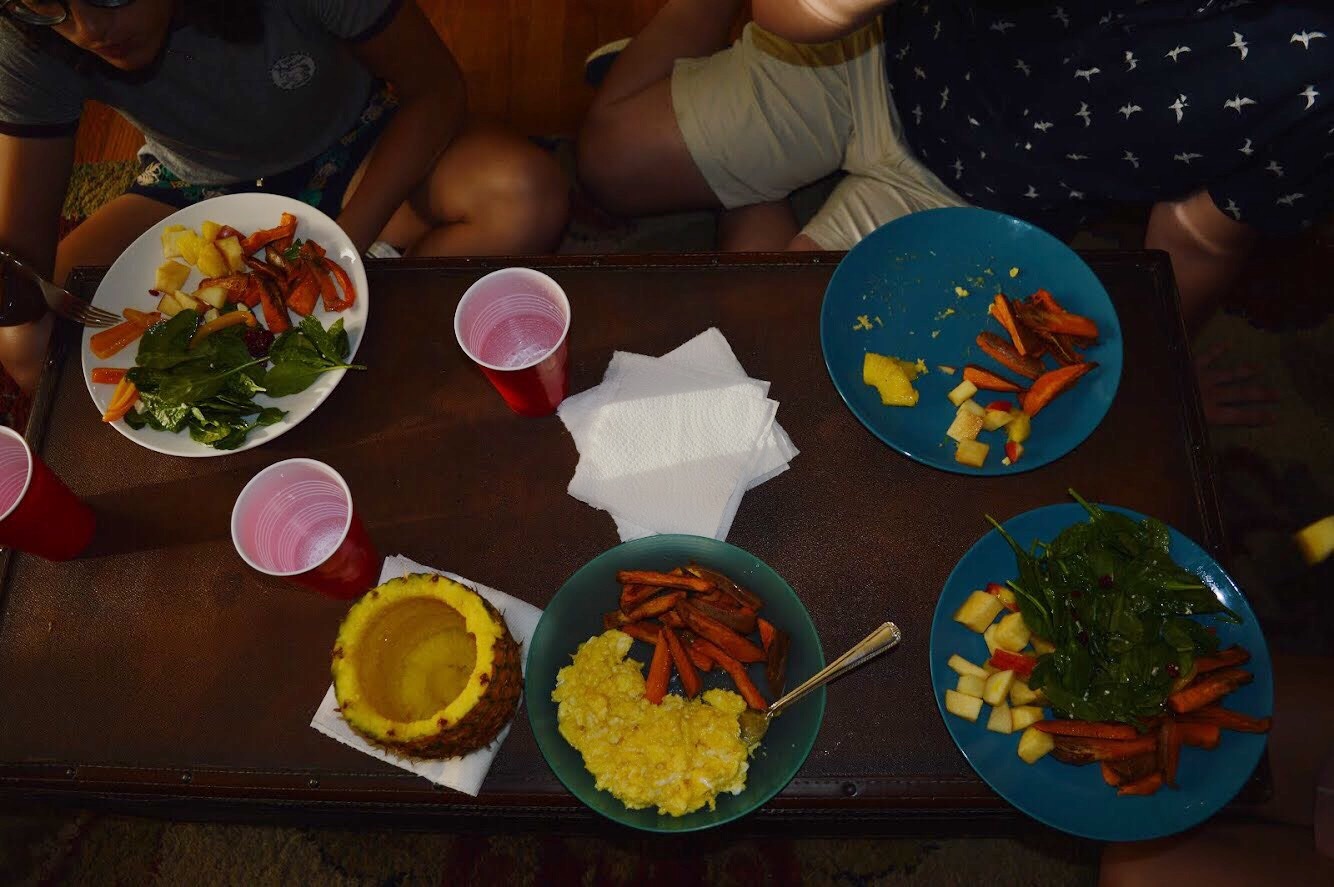
We had a variety of food including salad with strawberries, potatoes, and chicken for some people, but eggs for Elizabeth and Amelia since they are vegetarian. Gina led the conversation with the question, “what does citizenship mean to everyone?” and Amelia clarified by saying “other than paying taxes, voting, and obeying laws”. Kate responded first by saying she believed citizenship was being a member of a community and having obligations for that community. She said this can be local or global. This was impactful because she will be traveling to the Philippines for a mission trip this summer and wants to do mission work for her career. We all agreed that all of us that being in a community and being a citizen means being cognizant and caring of the things going on in your community. Lauren also brought up the point that knowing the history of the place you live and observing how that affects your community today. We then got into talking about how our history in America has changed our country today. Now our country is more about embracing where you came from instead of adjusting to American culture. Tatum talked about how it is important to encourage people to embrace their heritage in order to work towards the betterment of our society. Elizabeth chimed in saying the reason she felt the need to be a good citizen was because she is a woman. We were a little confused, but she expanded on this to say that she feels as though being a woman in America is a privilege. She said this because many women in other countries do not have the same freedoms that we do. Therefore, because of the privilege she has from her country, she feels the obligation to be a good citizen. This is a unique way of looking at citizenship, but definitely brought a different perspective to the table. After that, Kate talked about how global citizenship means fighting for the rights of people who are oppressed. From there, Gina asked the question, “what do you think are the best parts of our world today?” Everyone hesitated for a little bit and admitted that all of the worst parts about our world came to our minds first. Some of the positive things we came up with were medical advances and furthering human rights. We also talked about how people are becoming more aware of the problems in our world, such as climate change and global warming. We moved into another topic on immigration and politics. Kate discussed the current political climate, specifically, how politicians use inflammatory language. Adding to that, we talked about how harsh and disrespectful people are to one another in our society, especially if it is something they are passionate about. We agreed that our country could use more civility. We connected this back to practicing citizenship and said that communities and members of communities should encourage listening to differing viewpoints. Overall, the conversation was engaging and I got to learn from other people’s perspectives on citizenship.
I believe our diverse perspectives and opinions added to the depth of conversation over citizenship. I learned that when people are able to separate their opinions on religion and citizenship, we are able to have complex discussions that assess differing sides of a subject. I believe that the added element of talking about our religious views within our dialogue added to the perspectives given. The problems we talked about were all things that we could address by being good citizens. It is up to us as members of a community to fight for change. We all agreed on certain things but felt comfortable enough to share our differing opinions with the group. Something insightful that I took away from the conversation was that even if people have differing views, we can find common ground a lot easier than we think. The questions we were posing while eating was directly related to a lot of our class topics. Honors 251 is all about citizenship and how big of an impact or say we have over wicked problems in our society. As we got to know each other’s opinions more, we were more empathetic towards each other. This reminded me of the “Empathy Readings” we did outside of class and the discussions we had in class. Both times I talked about it, the atmosphere felt comfortable and like I was in a judgement free zone. This is also how it felt when we were having our Kentucky Kitchen Table meal which was calming for me. I feel like I know these six girls on a more personal level after this meal and have a wider view on the topics we discussed.
I had my KKT on March 20th with 6 people, including myself, Brandon, in Georgetown, KY. The others were named Drew, Michelle, Chris, Richard, and Joyce. Drew and I are both around the same age. Michelle and Chris are both in their mid-40’s, Richard is 72 and Joyce is 68. Drew and I are both from Central Kentucky, while Chris is from Western Kentucky, Michelle and Joyce are from Eastern Kentucky, and Richard is from West Virginia. Michelle works at a CPA’s office, Chris works for Toyota, Joyce used to work in an office for the board of education, and Richard was in the Army (He went to Korea to guard the border, but it was during the Vietnam War) and then he was a Coal Miner. As you can tell, we were all different ages, with three generations being represented, and were all from vastly different regions of Kentucky. Many of us had had very different job experiences and therefore different experiences with others in life.
To the first question they all had different answers. To Michelle, being a citizen meant being involved with others in the community, but not just by giving them what they need, by enabling them to get what they need for themselves when possible. Sort of a teach a man to fish rather than feed a man for a day sort of outlook. Chris said that he thinks that being a good citizen should mean that people leave each other alone more, to not get too involved in others’ affairs unless they ask for your help. He said that everyone has the right to be active as a citizen or not be active because it is their choice and we all have our roles to play. Joyce said that being a good citizen means helping others in need. Joyce grew up very poor, so she has a lot of sympathy for those in need. She understands what it is like first hand to be in need of food and clothes, and that It can be hard to ask for that sort of thing from others. Richard said that he thinks that people need to be more informed members of communities in order to act better. He feels like things are very tumultuous in the U.S. right now and that we need people to work together to fix them, but they need to learn what they are talking about first. Drew said that everyone needs to help each other when they need it, and that we all need to be more involved with our communities and the others in them. For me I fell somewhere between Michelle and Chris, I think that people shouldn’t have to be involved if they don’t want to, but that personally I would like to help other people through programs that help them to get what they need and to learn how to help themselves.
One thing that was really interesting for me about the talk was that Chris and I both found out we were part of the same political party. My family and I almost never talk about politics since it will normally lead to arguments, or so we worry, so we never ever bring it up. But in bringing it up we learned that Chris and I both feel the same way about a lot of issues and were both a part of the same Party, which is even more impressive than it sounds because it is a third party, not Democrats or Republicans. It was really fascinating to me that I could live under the same roof with someone my whole life and not know that we both felt the same about so many things. I guess it makes sense though, we probably shared a lot of the same ideas and talked about them in passing without really realizing it.
Richard responded a lot to the question about how a job helps others in the community since he was in the military and he was a coal miner. When he was in Korea he wasn’t just there to protect Americans, but also to protect people in Korea. He also felt like he did a lot for the community as a coal miner since they used to give people all across the country electricity. Joyce used to work for the board of education, she chose what students ate for lunch every day, so she played a huge role in her community. She was part of deciding what healthy options kids had to eat every day, so she played a role in almost every kid’s life in her county every day. Michelle does taxes, so obviously that plays a big role in society. Chris makes cars, but the company he works for is what keeps my entire hometown going, so that plays a big role in the community as well. Drew and I are both students, so we learn about how to make a difference in society even if we don’t have jobs to do it through yet. We still try to help others and be involved at our schools because we are the future of the community.
The only real debate was between Drew and Richard. They were debating about someone being a citizen because they were born on U.S. soil, but not having parents that are from the U.S. that have just moved here. Richard said that he couldn’t understand how someone who was only born here and doesn’t have family from here could be a truly engaged citizen because they would have no love for the land or the community. This may seem like a bad thing to say at first, but it is important to remember that he is from a town of about 500 people in West Virginia where there was only one family that wasn’t white, and they were Native Americans, not immigrants. Drew, on the other hand, has a lot of friends that are immigrants, so he explained to Richard that they can easily grow a love for the community when they live here, especially if the community takes them in and makes them feel welcome. If that happens, they may even love the community even more than others in it do.
Overall the dinner went really well. I learned a lot about my own family that I never had because we don’t normally talk about these sorts of things. It was also nice to get family that we don’t see very often to come over and have dinner, since my family and I almost never take the time to sit down and have dinner at a table together like this. It related to class because it showed me how much people have different ideas about things in one single family. Some thought they shouldn’t have to be engaged in the community, while others thought they should be. It reminded me of the environment readings in the way that some people think we should all do little things to help, like Drew, and some others, like Chris don’t think that there is much we can do and should leave it alone. Others, like Michelle, think we need to change how we work as a society, not just as individuals. It all tied back into class very nicely and the entire dinner went smoothly.
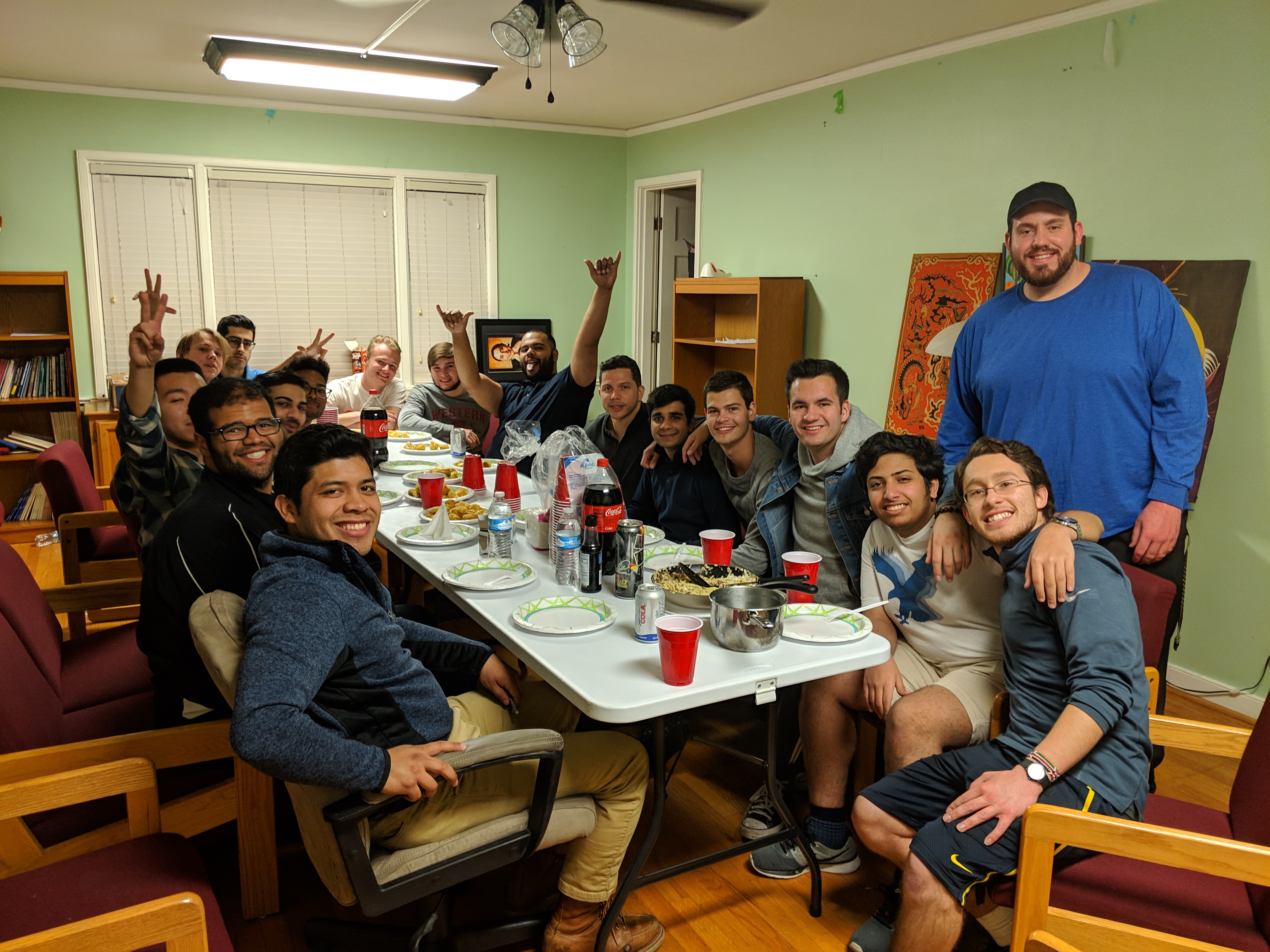
My Kentucky Kitchen Table took place on March 15th, 2019 in Bowling Green. I am one of the founders of Beta Gamma Omega, the first international fraternity in the state of Kentucky. Therefore, I incorporated my KKT into one of our fraternity events designed to bond with each other. This was the perfect time to have the dinner, because many new members had recently joined the fraternity, so there was an equal mixture of guys that I knew very well and guys that I was yet to be well acquainted with. Furthermore, although we are all male students of roughly the same age, this was the best way to ensure having a diverse group of people, as we all come from different countries.
To provide a very brief
description of the 18 guys there: Shawn is a film major from Kentucky, Lane is
a Spanish and film major from Tennessee, Antonio is a Spanish and Sociology
student originally from El Salvador, Bader is an international student from
Kuwait, Serge is an exchange student from the Netherlands studying business,
Humza is a business major from Pakistan, Roland is a finance student from Miami
with Nicaraguan and British heritage, Jona is a veteran and is originally from
Korea, Mason is from Kentucky, Hunter is a Political Science major from
Kentucky, Pedram is an Iranian Chemistry major, Andrey is an international
student from Russia, Eydel is a finance major who immigrated here from Cuba,
Ash is a graduate student from India studying in finance, Reuben is an
Architecture and Chinese student originally from New York, Deven is a Political
Science and Japanese major from Kentucky, and Juan immigrated here from Mexico
and is studying Mechanical Engineering.
After we all worked
together to cook food, we began our conversation around the table as we were
eating. The conversation started with me briefly describing the KKT project,
and then asking the required question about citizenship. The answers to this
question were actually quite similar. The general themes of what they said were
along the lines of caring for those in your community, making sure everyone has
their basic needs met, protecting and exorcising your rights, and taking care
of the little thing in our community – such as recycling and fixing roads. This
set a general trend where most people expressed similar values when the broader
questions were asked or topics introduced. I was not the only person who
noticed this, and later in the conversation, when I asked “Have you ever had a
conversation with someone from a really different background than yourself?”
from the handout packet, as well as their experiences meeting all these guys
from around the world, I wrote down a response from Hunter that I thought was
very well articulated. He roughly said, “It has shown me that people really are
not all that different, regardless of where one comes from. Despite coming from
different cultures, we all have the same values, wants, and needs.”
Throughout the KKT,
several times a lot of the guys began debating about more specific political
issues. These issues ranged from the Trump administration, how to tackle
immigration, social welfare, universal healthcare, dispute with and between
their own countries, and so on. This has become a staple of our friendships
since this day, and we often talk about political issues. Fortunately, this has
always been conducted in a very friendly manner. In seeing them debate these
various issues, I can relate it back to “the elephant and the rider” that we
studied earlier in the semester. Sometimes others would disagree with a
statement someone else said, but after deliberation and some thought, usually
found that they had more common ground than what divided them. Most of them
also shared the same concerns and cared about similar social issues, such as
corruption, world hunger, wealth distribution, recycling, and so on.
Interestingly, a common theme for the answer to the question “What kind of
person would you like to be?” was also that everyone wanted to be “relevant.” Basically
many people said that they want to somehow leave a mark on society and the
place that they live, a mark for the better.
Before having this KKT, I
expected religion to be a huge issue and talking point. This is due to the fact
that there were Catholics, Protestants, Muslims, Agnostics, and Atheists all
present. Surprisingly, this was not talked about much aside from when I asked
the question “Does your religious or spiritual identity relate to how you think
we should treat other people?” All of the Christians and Muslims expressed that
it does, but that people should do unto others as they would have others do
unto them. Although they vary by scripture and teachings, it all comes back to what
was stated earlier by Hunter, “we all have the same values, wants, and needs.”
Surprisingly, the most
profound answers came from asking the conversation starters, as they were quite
broad questions. At times, the discussion would devolve into debating politics
or some other issue. In those cases, I would wait a couple minutes and then ask
another conversation starter. Although many of the answers were similar, I do
not believe this comes from any peer pressure of sorts, because as I have become
more familiar with everyone I know that they will speak up if they disagree
with something. This KKT has taught me that not only is it important to learn
how to be a citizen in your own community, but it is also crucial to learn
about the outside world and how to be a global citizen. If it is the role of a
citizen to care for one’s own community, then it is the role of a global citizen
to care for the entire world.
I am very pleased with
the results of my KKT, and had a lot of fin conducting it. I was able to lead a
thoughtful discussion with a very diverse group of people. However, if I were
to change anything, it would be to include people of other ages and genders. If
there were older people, then that would possibly show a difference in values.
As a few of the guys brought up, there has been an increase in globalization,
which means there is more exchange of different cultures, and more of an
exchange of ideas. This instant communication with someone on the other side of
the world fosters global citizenship. It would be interesting to hear the
opinions of elder people from many different cultures. Furthermore, including
women in our group would have brought another unique perspective on all of
these issues, perhaps bringing up many points and thoughts that did not occur
to us.
The Kentucky Kitchen Table took place in Bowling Green, Kentucky on April 11, 2019. Present at the dinner included the following individuals: myself, Hayden, Elizabeth, Erika, Amelia, Logan, and Laura. Hayden, Elizabeth, and Erika are all from Louisville. I am from northern Kentucky and Laura is from Spain. I am a nursing major, Erika is a political science and economics major, Hayden is a psychology major, Elizabeth is a psychological science and sociology major, Amelia is pursuing social work, Laura is sports psychology major, and Logan’s is unknown. In the beginning, normal conversations were held such as those about commonalities between one another. Residing in Louisville and living in the same dorm at Western were discussed. Interests were brought up such as Greek life, majors, hobbies, and enjoyable things to do around campus. Everyone at the Kentucky Kitchen Table had dinners with their families at some point in their lives so it was not a new experience for anyone.
The conversation then turned to each of our individual goals and expectations for the future as well as addressing our role as a citizen. The general concept of citizenship followed similar ideals between all members present at the dinner table. Amelia stated that citizenship is about understanding the responsibility you have to your community and acting on that responsibility by working to make your community a safe place and a place that cares about its members. In addition, also knowing what is going on in your government in order to be informed is important. Erika, myself, and other individuals all agreed that is was important to be informed and aware of issues. I added that the ability to cooperate and participate was essential in defining a good citizen.
The positives of our world today were examined, and Hayden stated that he really loves the diversity, uniqueness, and beauty of our society. So much is unexplored and unknown. Specifically going into locations, Elizabeth loves living in America because of the rights women have. Those from Louisville stated that they enjoyed residing there. When asked the question about knowing your neighbors, there were mixed responses. Some individuals stated that they knew their neighbors and others stated that they didn’t, but knew the individuals next door to them in their dorm. Suggestions were made to encourage individuals and neighbors to go outside and strike up conversations.
In an utopia, qualities that were desired included living in a society that was safe, supportive, accepting, and problems could be openly as well as rationally discussed. A community that values kindness and looks out for one another was also emphasized.
Individually as citizens, even though not religious, Erika said our role is to not discriminate against or be hateful towards others. The possibility to still care about others and be a genuinely good or decent person can happen without being religiously affiliated.
Our current employment roles may be insignificant, but we can still be nice to one another or help inform or be informed by others. As Erika works in the political science department, she is aware of politics and the government. She assists other students, but her role in comparison with others at Western is minimal. Personally, as a lifeguard I have an obligation to help others in need and have the responsibility to maintain their safety. Through small interactions with others and our roles as citizens, we collaborate with people to reside in a functioning environment. In addition, we strive to live our own successful lives.
Conversing about government, individuals running for office according to Erika should be transparent and they should be more focused about people’s concerns. Candidates shouldn’t take endorsements from large organizations and the issues shouldn’t be about money. Personally, I believe it is the citizens job to reinforce that those elected are serving the best interest of the people.
Social issues that came up that were close to people’s hearts included immigration. It was mentioned that many people’s arguments aren’t valid as immigrants don’t receive benefits. They work low paying jobs and people use their reasoning as an excuse to be discriminatory. The animosity is upsetting. Climate change is another social issue that was discussed. It is important that individuals realize the point of no return is soon and major changes need to occur to prevent further destruction individually as well as on a large social scale.
Throughout the Kentucky Kitchen Table, I learned everyone had different backgrounds and experiences that led to their own unique perspectives. Generally, there was a decent amount of agreement between what the world should look like as well as what citizenship should entail. Amelia loved how the current generation is more aware of the problems that are faced today and more politically as well as socially active. A lot of change is still needed to combat various issues, but through deliberative engagement, discussion and awareness are being brought to light. In the course the three main ideas include having more say over our own lives as well as others’ having a say over their lives, how we live well together, and how we solve problems. Being a good citizen incorporates all of these ideas; participating and communicating allows individuals to have more of a say over their own lives and others’ over their lives. Through deliberative engagement, we can live well, or at least better together, as we rationally discuss issues and bring various issues to the surface. Utilizing deliberative engagement allows citizens to tackle problems and develop actions or options for solutions.
An article that emphasizes the importance in deliberative engagement is “How we Talk Matters” by Keith Melville. Conversations that are exchanged between neighbors, politicians, family, and friends allow a connection between individual lives and their communities. Personal experiences, circumstances, and information discussed can identify where people would like society to be as well as the current state of various issues. Melville emphasizes that “we are honing a basic civil skill by connecting our personal lives to public issues and political decisions”. Everyday people engaging in political life gives them more say over their lives, others’ lives, and solving wicked problems.
My Kentucky Kitchen Table was held in Bowling Green, Kentucky on April 11, 2019. Our host was Elizabeth, and she offered her home to us and other students where we had a delicious meal and interesting conversation. Elizabeth is a professor at Western Kentucky University. Also present was another professor, Jennifer, who teaches history. Something I found very interesting was that she is actually from Canada, and she completed her graduate education in Kentucky. Also present was two students from my Honors 251 classes, Riley and Autumn. Riley is from close to my hometown and is also a biology major. Autumn is from Lawrenceburg and is studying Chinese history and culture. Also present was a graduate student here at WKU who is soon going to be moving to New York. She is from a rural area like me. Also, Elizabeth’s daughter, Victoria, was there as a guest at the table as well. Together, we all brought forth a variety of ideas and backgrounds that allowed me to receive many different viewpoints and perceptions I had never before thought about.
We started off by filling our plates and introducing ourselves. We had a delicious dinner, and I felt very much at home. Though some of us were familiar with each other from class, I did not know the other members. Introductions were made and then we started exploring each other’s backgrounds. I started off by asking if anyone grew up having regular family dinners like this at home. From this I learned more about each respective person at the table’s family dynamics and a little more about them. The graduate student spoke about how her and her mom would argue growing up, so family meals could be tense. She talked about how now, however, that had changed a lot since she left home. I discussed how growing up we always had regular meals but that changed as we grew up and got busier with our lives. We later got into a conversation discussing the recent turmoil at WKU involving the dean of Potter College. Jennifer seemed very proud of the way students stood up for what they believed in, and thought it showed how students really can incite change through peaceful protest and having their voice heard. I said how through my job at WKU as an Admission’s Ambassador how we have to handle such situations and that I was also proud of the university as a whole for actually taking student’s voices into consideration. After discussing this, we eventually moved into a discussion about citizenship, and talked about what it really means to be a good citizen. I thought that being a good citizen relates to being a good neighbor, and wanting better for those close to you. The graduate student spoke about how we should learn the problems of the community we are in, so then we may strive to fix the issue. Jennifer said something that really resonated with me, when she said we need to know the history of our communities, so we cannot repeat our past, and become better citizens in that way. Autumn discussed having compassion and love for those around us. What Victoria said really stuck with me as well. She said citizenship was about being fair. Sometimes I am amazed at how young minds can see the world so much like us, and it’s actually really beautiful. I think overall themes were compassion and knowledge. Through knowledge we can have more compassion, and through compassion be a better citizen.
During the conversation Jennifer asked each of us in the current Honors 251 class to say what we had learned. Riley talked about how his viewpoint changed surrounding the opioid crisis, specifically supervised addiction facilities. Jennifer was very pleased the class had that level of impact on him. I talked also about how my viewpoint of the opioid crisis changed, specifically after coming from a family who has very closed beliefs about addiction. I loved hearing perspectives from a faculty side as well, and also learned more insight into the graduate student’s life. She described how the dean of Potter actually funded her time in New York as well as learning she grew up in a similar environment to myself. Autumn brought a unique perspective to the table and talked about a more pessimistic viewpoint. Though all of our opinions about some things were different, it was really refreshing to be able to agree on some things and be exposed to new ideas, or ideas presented in a different way. I don’t get that very often and think it’s a great aspect of the Kentucky Kitchen Table.
Connecting to what we’ve read in class, I thought about what Jennifer said in relating to the importance of the history of an area. The reading “Green Fire, the Still Point, and an Oak Grove” encapsulates that perfectly. In the reading many students were protesting, but honestly had no idea what they were talking about or even what they are fighting for. Though passion is great, I think it goes back to the idea we discussed about passion without knowledge can be useless. I also thought about the reading in class that detailed solving problems through deliberation. Though our KKT wasn’t a deliberation exactly, it was a time where we discussed what’s behind a lot of wicked problems: what it means to be a good citizen. Though I don’t think we can solve major world issues by eating dinner together, I do think if we did this more often the world just might look a little different. Through our discussion of the dean situation at WKU, I also thought of central questions in the class. “How can we live better together” is one of those questions. I think it played out perfectly in that situation, where student voices were heard, and the problem seemingly solved. I was honestly really nervous before this dinner. Though I knew it was an assignment, I actually wanted to get something out of it and have a stimulating conversation. I was very pleased with how it worked out,and would love to get to know further the people I conversed with. It can be really difficult to have these conversations eve with people you have known for years. But, if you make it happen, you can have your eyes opened and your horizons broadened.
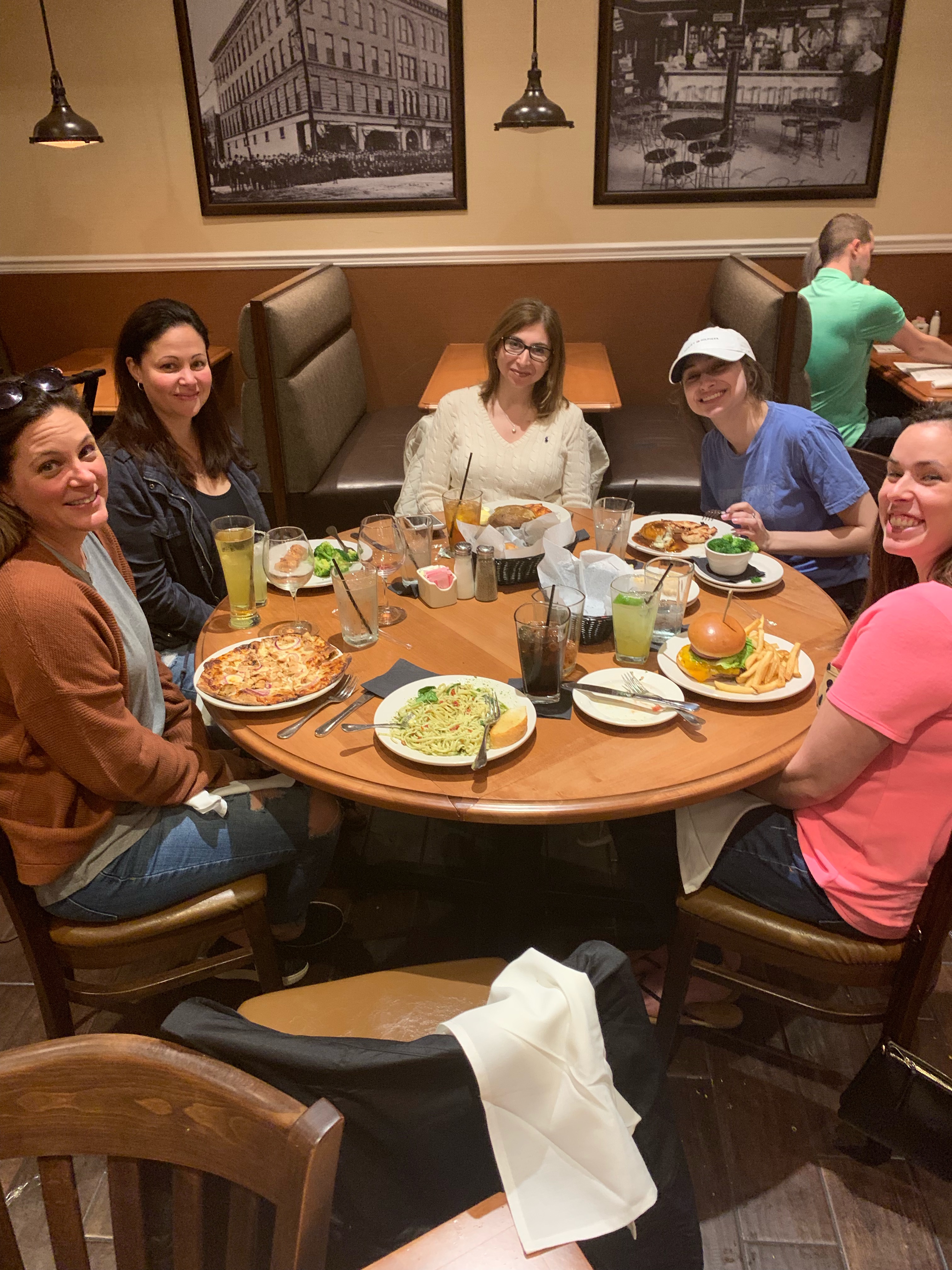
I “hosted” my Kentucky
Kitchen Table on April 6, 2019 in Bowling Green, Kentucky. I am not from
Bowling Green and neither were the attendees of my KKT. Therefore, we ate at
Mariah’s, a quiet restaurant in downtown Bowling Green. My friend Sarah and I
are in the same sorority and it was Mothers Weekend. Our moms and my mom’s
friends had traveled from the suburbs of St. Louis and Chicago and were ready
for a nice meal and discussion. On the left, is my mom. She lives in
Edwardsville, IL, which is where she grew up and attended university. She
considers herself to have lived a “white picket fence house” type of life, very
normal in a sense. Next to her is Irma, my mom’s friend. She grew up in New
Jersey and now lives in Edwardsville also. She grew up with five sisters and
had a rowdy childhood. She spends her days looking after and assisting a
disabled man in the community. Her and my mom met because they have similar
aged children who became friends in elementary school, and they have remained
friends through middle school. Next to Irma is Diana, Sarah’s mom, who I have
only met once before. Diana is from Gurnee, IL, about an eight-hour drive from
Bowling Green. She has three children who are attending three different
universities, all in the south. Her husband has a house near Florence, KY, and
she bounces between the universities visiting her children. Sarah is sitting
next to her mom on the right. She is a very funny, outgoing girl who always
stops strangers if they are walking a dog. She is a nursing major and is
constantly studying to keep her direct administration spot in WKU’s nursing
program. Next to Sarah in the right bottom side of the picture is Liz. She has
two sons who are age seven and one. Her and my mom met because their husbands
play in the same lake-community bags (cornhole) tournaments on Wednesday
nights. Liz is a stay at home mom but watches other children after school
throughout the day before their parents get home from work. Together, we all
brought a lot of diversity to the table and had different ideas about what
community and citizenship meant to us.
Beyond voting, paying
taxes and following laws, what does citizenship mean to you?
This
question established a lot of different answers. My mom answered first stating
that she believes citizenship consists of working together with other citizens
to create an enjoyable place to interact and grow. She included examples of the
lake community that we live. We have community clubs to help with landscape and
beach upkeep in the public areas of our community. The community also hosts
annual holiday related events that end up being traditions for most families
around the lake. They were started as a way help form bonds between neighbors
and community members. Some of these include the Fourth of July ski show, the
Easter egg hunt, and breakfast with Santa. Kelly mentioned that our
neighborhood would not be as enjoyable to live if she didn’t attend these
events as a newlywed with my dad to help meet people in their new neighborhood.
My
mom’s friend, Irma, added that citizenship means helping your neighbors,
coworkers, and friends in as many ways as you can. This was a response that I
expected from Irma. She has been taking care of Jeff, a disabled community
member, for the past few years. She does his grocery shopping, takes him to
doctor appointments, administers his medications, and keeps him company during
the day due to his lack of immediate family. She recognizes that Jeff would not
have the same quality of life if he didn’t have help from Irma every day. Irma
sees positive change in her surroundings when she is helping Jeff. Liz seconded
the point that Irma made about helping neighbors and friends in any way
possible. Liz watches her neighbor’s and friend’s kids after school to assist
working mom’s busy schedules. It makes her feel like an important member of her
community and is making a difference because she is assisting the people
closest to her.
Sarah
had no experience with baby sitting or helping disabled citizens in her
neighborhood. However, she felt that my mom and her friends made a good point.
Sarah made a similar comment as my mom and added that citizenship means
creating a safe and supportive community for other citizens. She has always
lived in a safe neighborhood that had children running around and playing every
day after school or in the surrounding summer heat. Parents would never have to
worry about children being around unsafe community members or dangerous
strangers. Diana confirmed Sarah’s statement. She mentioned that she knew most
of her surrounding neighbors and felt comfortable letting her children play
with other kids around the neighborhood. She mentioned that the parents in the
neighborhood would often gather in somebody’s driveway to catch up and watch
over the rambunctious children.
All
of the responses had the same theme. They included creating a helpful and safe
community for everybody. This allows people to live and prosper in a positive
environment. It also creates a sense of pride in their community. This theme relates
to the first central question of our class: how can people live better
together? It is a hard question to answer, but the attendees of my Kentucky
Kitchen Table made it clear that it is a major priority in the sense of
citizenship. I think that people can learn by example. If just one person
begins to help their community members, like Liz and Irma, other people will
see the impact it creates. Ultimately, it could inspire others to help their
neighbors and fellow citizens. This would make it possible for more communities
to be like Diana’s, Sarah’s, my mom’s and my own.
My
perspective of community and citizen’s obligation to one another has changed
dramatically throughout this course. I used to believe that citizens had
absolutely no obligations towards one another. I thought that people just
simply did things out of the kindness of their heart and it did not affect the
community that much. However, I have changed after talking with the members of
my Kentucky Kitchen Table and specifically the case study about the little boy
who was saved by a bystander after he fell into a pond. As citizens we are obligated
to help each other. We are obligated to be a good person. We are obligated to
create a safe environment for others. Without any obligations and expectations
for citizens, the world would be such a hostile place.
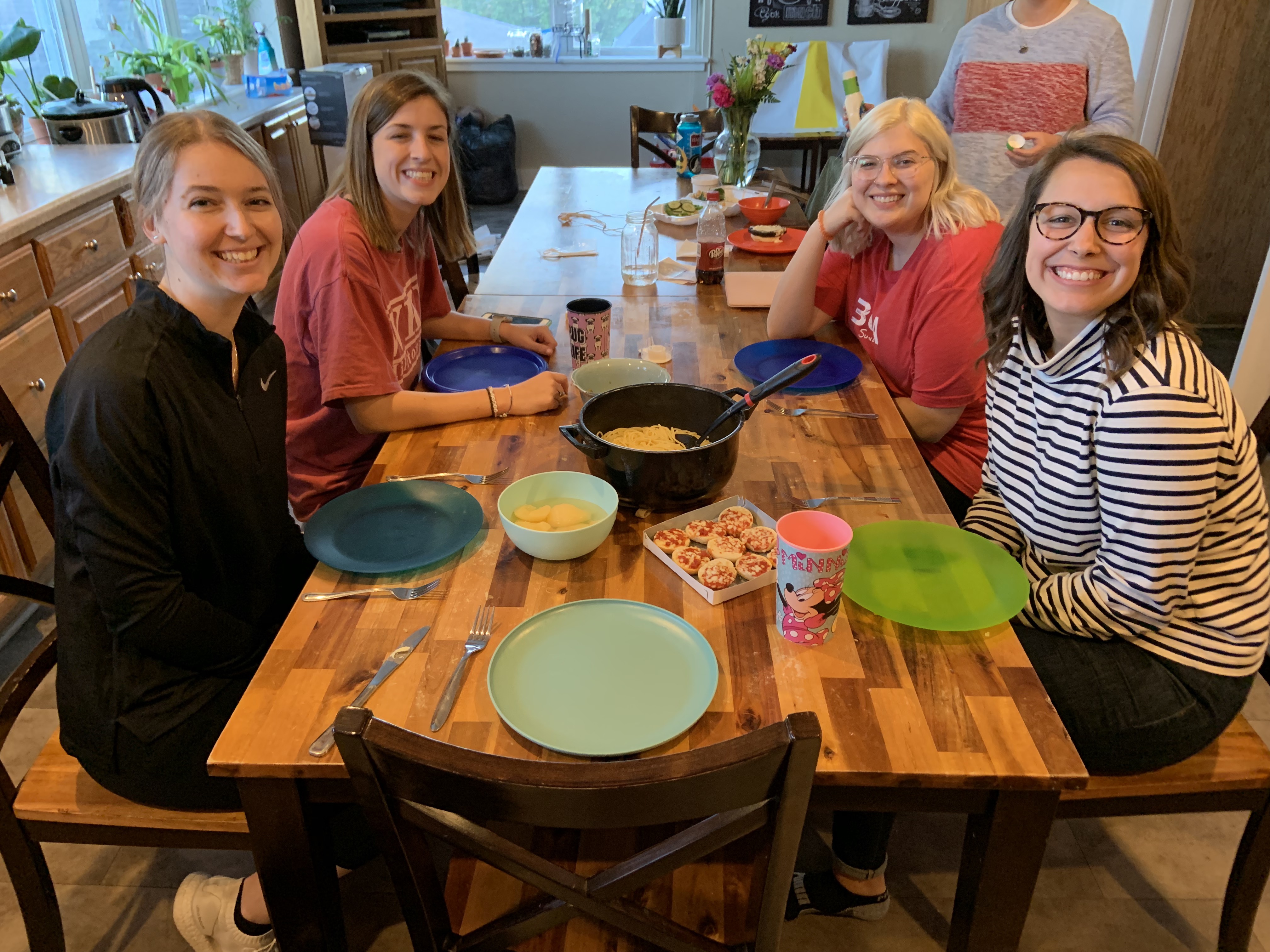
This past Sunday, April 14th, 2019, I had the loveliest experience hosting a Kentucky Kitchen table of my own in Bowling Green, Kentucky. I was accompanied by four women named Kylee, Claire, Izzy, and Margee. Kylee is girl I met through my sorority. She is a special education major from St. Louis that came to Western Kentucky University to get away from everything she knew. She upholds Christian values and practices and takes on a more conservative political approach. Claire is a friend of a friend, from Murray, Kentucky and finds comfort in calm quietness. She recently changed her major from art studies to International affairs and admits to a mid-college life crisis. Izzy is my dorm roommate from Bowling Green. She is loud and spunky and very opinionated. She is Agnostic and very liberal. Margee is a friend of a friend that I was do not know well. She enjoys intentional conversations, bible study, and helping others. Her good heart shines through everything she says and does. As for me, Alli, I’d describe myself as a student from Louisville who is far too obsessed with animals, and really doesn’t care for children, but you would probably never guess it. I consider myself moderately liberal, atheist, and someone constantly trying to change the stigma around liberal atheists.
I described this event as a potluck with no theme and encouraged everyone to bring something random and tasty. With that being said, we had a delicious meal of buttered noodles, pepperoni bagel bites, pear halves, and green beans. We all laughed at the odd but delicious combination of food and quickly applied our current situation to citizenship. I brought to attention how our current table represents how each of us bring something different to the table as citizens. Each of us then went around and discussed what we felt we brought to our community as individuals and our answers varied greatly. Morals and empathy played a huge role in the direction of our answers. Some people answered suggesting they bring a certain set of emotional characteristics that make them a good citizen, one said her faith controls her action and ultimately her behavior, while others simply stated their interests or skills as defining factors.
We talked much about the community we were raised in and the one we’d like to live in as adults or create for our children. A common theme in our discussion at dinner and in our class was empathy. Everyone around the table felt the world had turned cold and natural, genuine, kindness was a dying trait. Our discussion brought me back to the class reading, “Empathy Exams”, in which a woman was an actress that tested the empathy factor of those in medical school. The reading showed an example of learning and developing empathy through verbal practice, making a questionable statement about whether empathy can actually be taught. The ladies in my group came from very different backgrounds, but all said they felt a lack of empathy in their community.
I learned how their claimed lack of empathy in the world can be found in and felt through “the little things”. They argued, sure, you can teach someone the right words to pretend they have an ounce of empathy, but empathy is more than words, it’s in your soul. Empathy is holding your neighbor as she sobs because her husband has passed. Empathy is helping the little boy who is worried sick about his dog that ran away. Empathy is helping the old woman carry in all her groceries from the car because she’s too frail to do it alone. Empathy is in your actions, not your words. It’s found in your interactions, the intentional and heartfelt conversations. It’s not in a dry, monotoned, “I’m sorry, that must be hard” that is too often practiced by those who want to seem empathetic but lack the natural grace to do so.
In regard to the first question, Margee lead the discussion and the others followed with definite agreement without much expansion to her answer. Margee stated, to her citizenship means basing your actions and decisions around working towards a better world than the one that existed before you were born. She believes it is our duty as world citizens to create an improved community through loving your neighbor, doing good for the sake of spreading the good, and living selflessly. This guided our conversation into the group feeling it is a citizen’s job and utter responsibility to care for others, especially your neighbors, despite differences that have created issues within our world on many occurrences. I believe this question allowed for an eye-opening experience for ladies of differing faiths. It warmed my heart to be able to share commonalities between loving others and doing good in the world with those that felt atheists or anyone without religious practices may not maintain similar values.
Our conversation about making the world better for future generations tied in to our class discussions during our wicked problem case study of the environment. The table acknowledged the impact corporations have in determining the health of our world ecosystems, but felt it is a group effort to truly make a difference. Izzy proposed legal action in hopes of preventing large businesses from getting away with environmentally harmful practices, while Claire discussed the impact of every average person making minor changes within their daily lives. Claire’s argument reminded me of, “The Energy Diet”, and Kylee, having read the article, supported the idea from the start.
After conducting a Kentucky Kitchen Table of my own, I have reflected mostly about perspective. As a person, I try to gear my interactions and responses to others around similarities and differences between our perspectives because I feel that it makes me a kinder, more understanding person. With each day my faith in this practice is enhanced, because I often see perspectives being the root of problems or the reason a problem is absent. I think, as the ladies learned through a thorough discussion of our beliefs and values through citizenship, it is extremely important to try to understand another’s point of view to the best of your ability before making judgements, especially in today’s world divided by differences. Alternatively, it is extremely important to note that even when you try your best to understand, it is quite literally impossible to feel and think the exact things and experiences as another human. I was filled with a sense of peace and humility when I say this applied to topics of religion and politics and was encouraged by the respectful and thoughtful interactions I was able to experience.
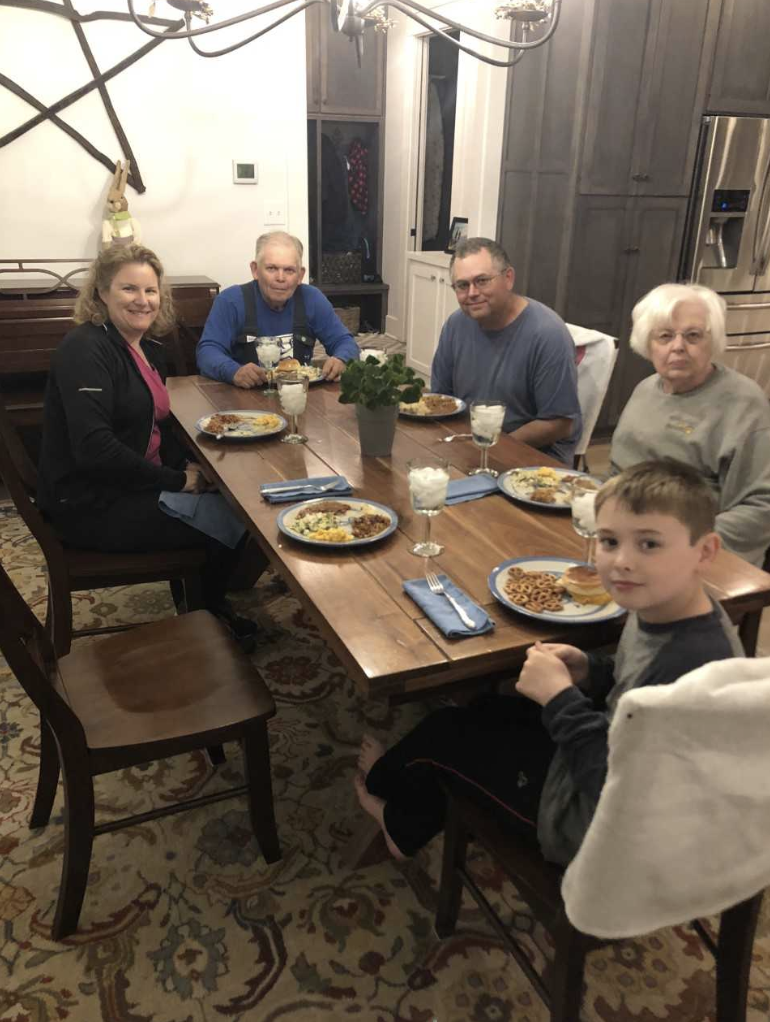
My Kentucky’s Kitchen Table took place on April 6, 2019, in a small town called Adairville, Kentucky. I was planning on hosting at my house in Louisville, Kentucky, but due to last-minute changes, my mom and I decided to host at her cousin’s house. There was a total of 6 people at dinner, including myself. Starting on the left is my mom, Jennifer, who was born and raised in Louisville, Kentucky. She is very involved in our local parish, and she owns our family’s bakery with three of her other cousins. Third from the right is William, who married my cousin, Natalie, and so kindly let us use his kitchen for dinner. He apologized for not being as good of a host as his wife is (she and her daughter were in Louisville that night), but my mom and I both thought he didn’t give himself as much credit has he deserved. He graduated from Western Kentucky University, lived and worked in Louisville for a few years, and now that his parents are getting older, he and his family moved back to Adairville to assist his aging parents in running the family farm. To the left of William is his father, Jim. Jim grew up outside of Bowling Green and graduated from the University of Kentucky. Martha, his wife, is sitting to the right of William, and she too graduated from the University of Kentucky. After graduating college, they settled down in rural Kentucky to start a family and farm their land. I had never met either of William’s parents before this trip, and my mom met them once at Natalie and William’s wedding. At the far right of the table is Natalie and William’s son, Mason, who is 9 years old. I used to babysit Mason and his sister, Hadley, quite often when they lived on my street, but I haven’t seen them much since I started college, and he was very excited to tell me about the piglet he would be raising this spring.
After everyone had made their plate of pork, salad, beans, and mac and cheese, I asked the question, “beyond voting, paying taxes, and following laws, what does citizenship mean to you?” After a couple seconds of silence, Martha said that she thought it was giving back to the community in any way you can. Jim agreed with her, adding that helping the people in your community makes a good citizen. William said by living your life in a way that brings something good to the people around you and the town or city you live in will bring about good citizenship. He emphasized how working a job is something that would make someone a good citizen, simply because they are giving their time and energy to accomplish something that our society has deemed important. My mom said that volunteering your time to the organizations you choose to get involved in will enrich the places you live in and help a person feel more connected to the place where they live and the people they live with – thus bringing about a sense of belonging and citizenship. As she said this I thought about how involved she is at my parish and grade school – she was the athletic director for multiple years while I was attending school there, and although it was unpaid and took up a lot of her time, she kept returning because she cared about the program and wanted to use her talents in ways that could benefit that specific community. She also mentioned that by getting involved, you can help turn your community into the kind of place you want to live. I thought this related back to one of our key questions in class: how do we have more of a say over our lives, and help others have more of a say over their lives? Simply put, the more involved you are in your community, the more likely you are to make changes that will impact your life in the ways you want it to.
After asking the initial question, I wanted to know more about life in rural Kentucky versus life in Louisville, and how that may affect someone’s perspective on citizenship. I began by asking how well everyone knew their neighbors. Jim and Martha have lived in their house for about 50 years, so they know all of their neighbors very well, and even though William moved away for a few years, he too knew everyone who lived near them. They all knew everyone who lived on their street, who they were related to, how long they lived there, what kind of crops they grow, where their children moved away to, and many more details that I don’t know about my neighbors at home, even though I live much closer in proximity to my neighbors. William said that for him, the strangest thing about coming back home after living away for so long was that there were many people who he grew up with who did the same thing – left for a while and came back home. He said it felt good to come back and be building a life and a family in the place where he already has roots. One of the things Jim said that stood out to me about neighbors was how he felt comfortable asking any of his neighbors for help with the farm or to borrow a piece of equipment he may need; however, with the increase in big farmers and the decrease in small family farms, he said the good farmers are a lot harder to come by now than they used to be. Many people are selling their land to large farming corporations because their children do not want to come back to take over the farm. Even so, Martha said that there are about 10 houses on their street belonging to only 4 different families – meaning that although times are changing, many people still do value family land and want to come back to continue on their traditions.
I learned a lot from this experience. It was interesting
to see how similar we all are even though we live very different lives. All of
us cared about and felt deeply connected to the places we live and work, and everyone
recognizes the value in giving time and talent to our communities. It relates
to Love Thy Neighbor by Peter Mass,
because he too found similarities in the most different of people – from America
to Bosnia, from people at peace to people at war. He showed that being human
involves wanting to belong and feel needed, and when we are active citizens, we
accomplish these basic needs.
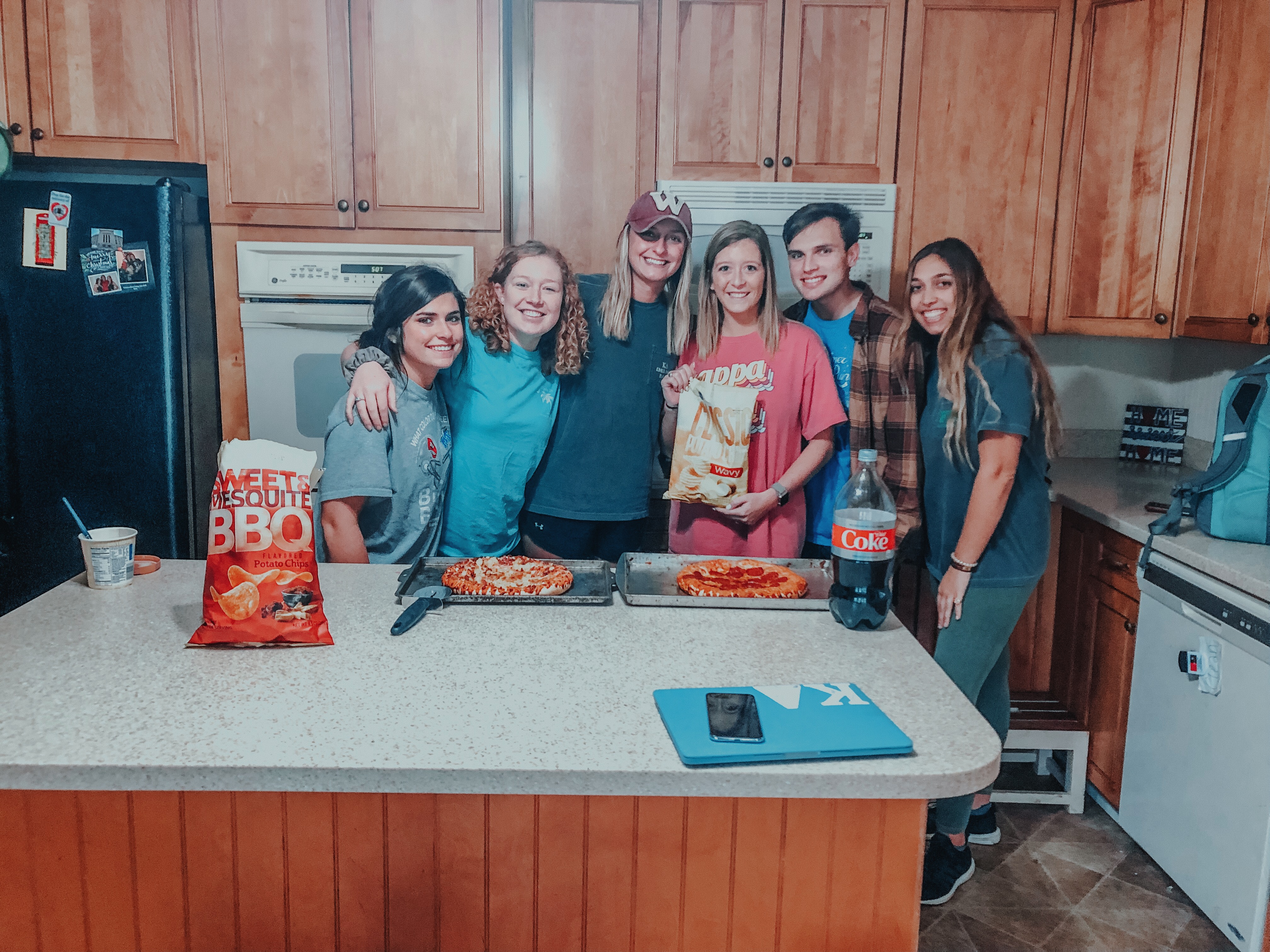
On
the cold, rainy day of April 4th, I along with a fellow Honors Student,
Sophie, sat down around a table with mutual acquaintances living in the Bowling
Green area for a traditional Kentucky kitchen table dinner. Inside the college
house located on Chestnut Street we devoured cheesy pizza, salty chips, and cold
soft drinks and discussed what citizenship meant to us in individual and
communal terms. Our guest list was comprised of WKU students with varying
geographical, political, social, and economic backgrounds. First on the guest
list was Harper. Harper is a highly involved sophomore on WKU’s campus from
rural eastern Kentucky. She identifies herself as a liberal democrat. She finds
most of her interests lie in politics and legal processes. Next, we have Kaitlyn.
Kaitlyn is a junior student at WKU that is from the western Kentucky area. She is
heavily involved within her greek organization. She describes herself as
someone who does not know a lot about political affairs but would consider herself
as a liberal democrat. Her friend, Hayley, was also in attendance. Hayley is
from the same small town as Kaitlyn. Hayley is a transfer student that is not
greek and comes from a strict, religious household and recognizes herself as
someone with republican leanings. Our last guest being Ashton. Ashton is a senior
at WKU. She is from Owen County, Kentucky. She describes herself as huge animal
lover and someone who has great interests in racial equality and votes primarily
for the republican party.
To begin our night, we started our
discussion with the question “Beyond voting, paying taxes, and following laws,
what does citizenship mean to you?”. Harper responded, “Helping your fellow man”.
Hayley agreed with Harper by stating, “I agree with Harper, it just about
fostering the spirt of community and helping out one another”. The rest of the
group agreed, with Ashton adding, “It is about being supportive of your fellow
neighbors”. These statements were the vehicle for our conversations for the entirety
of the evening. Prior to our dinner, the consensus among the girls was that
they had never considered what citizenship meant. Oddly, though, as we chatted
away eating greasy pizza I found that all of them had a stake in politics and
were exemplary citizens. Accompanied
with my realization I uncovered that their passions on citizenship resided with
the matters that were attached to their empathetic feelings.
The article The Baby in the Well written by Paul Bloom was presented in our Honors
course. This article provided substance to our class discussions on empathy’s relationship
to our community. Bloom’s analysis of empathy provided highlights on the dialogue
on the inner role of empathy and its significances in our modern society. Specifically,
Bloom looks at what causes us to have more empathetic feelings on particular subjects
weighed against other subjects. He uses multiple cases to support his examination
of empathy. For example, he looks at Baby Jessica, the 18-month year old that
fell down a narrow well in Texas during the 80s, and a plethora of other cases,
for instance the disappearance of Natalee Holloway, to distinguish what generates
the human feeling of empathy. He concludes that “The key to
engaging empathy is what has been called “the identifiable victim effect.”” (PG
3). In essence, he argues that when we can identify a specific victim, we can
better connect with their story and have empathy.
As we chatted away through the
night I kept finding myself referencing Bloom’s argument. Case in point, Hayley
was heavily empathetic about the cost of healthcare and as a result I found
that in any of our discussions about our community she referenced the personal
struggles her family had with affording the costly treatment of her mother’s
diabetes. She had an identifiable victim and as a result she could find a deep,
empathetic connection. By fostering empathy on a particular subject, she was
more willing to speak on the issue as a citizen and bring awareness to the community
around her, overall a more civically engaged citizen.
This theme of empathy’s relationship
with citizenship was sewed throughout the night’s conversations. When the discussion
of racial equality was brought to our dinner table. Ashton referenced the
multiple service trips she had made with her church and how that brought
awareness to the differences of social, political, and economic treatment that members
of different races experienced. All of us listened intently to each other as we
individually spoke on racial equality. Soon, after a quick glance at the clock
and empty potato chip bowls, I realized we had spent a large portion of our
dinner openly deliberating on race relations within our community.
After our dinner, Harper, noted that
she was exceptional fond of our dinner as she can rarely find the time in her strenuous
student schedule to have such in depth conversations on issues, like race, that
she sees within her community with her peers. This dinner was a unique
opportunity for myself and the other members of our dinner to express our
deeply held convictions on the relationship of oneself and citizenship.
From an outside perspective, I could
identify that the household dynamic between our dinner participants was highly civic.
Their house entertained daily, assigned chores, all roommates had sincere
relationships with each other, were cognizant on each other’s life happenings,
and generally the house fostered an inclusive and effectual environment of
living. There consensus on the role of citizenship allowed for such a highly
civic household. By analyzing the nature of their home, I was able to uncover
that by living in such a highly civic home that they were better able to understand
the viewpoints of others. Furthermore, understanding the context of their answers
I better understood why they viewed citizenship the way they did.
As our cheese pizza began to congeal
and our sodas became flat we concluded our dinner. After reflection on the
night I shared my finding with two of the dinner participants, Harper and Kaitlyn,
and explained to them my take on our dinner. We agreed that it was refreshing
to see such a variation of mindsets and viewpoints. We also agreed that talking
about these issues in such an informal environment allowed for respectful conversations
that made us feel better about the future. Who would have ever thought insightful
conversations were hidden underneath pizzas and kitchen tables?





 Kentucky's Kitchen Table